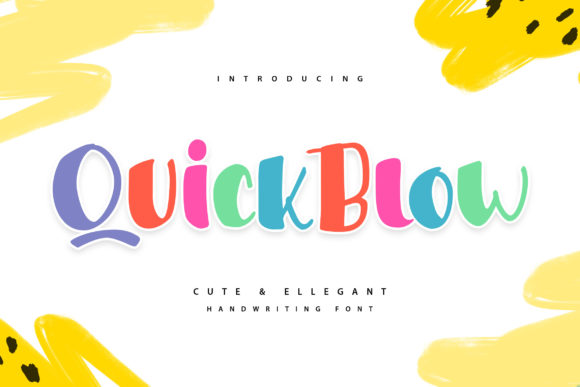
Quickblow: A Whimsical Display Font for Digital Creativity
I was working on a redesign for a boutique online store last week, and I needed a font that would stand out in the hero section. That’s when I stumbled upon Quickblow. It’s a display font with a playful, quirky charm that instantly caught my eye. The moment I saw it, I knew it could bring a unique personality to this project.
Quickblow is a fun, whimsical, and quirky display font that feels like it was designed with creativity and joy in mind. Its curves and playful shapes give it a very childlike energy, which makes it perfect for brands targeting younger audiences or looking to inject some lightheartedness into their digital presence.
Testing Quickblow in Real Web Layouts
I started by placing Quickblow as the main headline in the hero section of the website. The font immediately stood out against the background image of a colorful product shot. It didn’t feel too loud or overwhelming, which was great for maintaining visual balance. The soft, rounded edges gave it a friendly vibe that matched the brand’s tone perfectly.
Next, I tested it on mobile screens. Since Quickblow is a display font, I made sure to use it only for short phrases and titles. On smaller screens, it still read clearly, even when scaled down slightly. This is important because readability on mobile devices can make or break user engagement.
I also experimented with using Quickblow over an image banner. The contrast between the bold, playful typeface and the subtle background image worked well. It helped draw attention to the key message without distracting from the visuals.
Using Quickblow in Different Sections of a Website
Quickblow shined brightest in areas where a strong visual impact was needed. For instance, in the landing page headline, it created an instant emotional connection with the viewer. It felt inviting and approachable—exactly what the brand needed to communicate.
In call-to-action buttons, I used a simpler sans serif font for better readability, but Quickblow worked well as a decorative accent in button labels. It added a touch of personality without compromising usability.
For the blog header, I paired Quickblow with a clean sans serif font. This combination provided a nice contrast—playful yet professional. It helped establish a consistent brand identity across different sections of the site.
On a course sales page, I used Quickblow for the title of each module. It helped break up the content and made the information more digestible. The font’s unique style encouraged users to engage with the content in a more relaxed and curious way.
Considerations for Using Quickblow in Web Design
While Quickblow is a fantastic choice for headlines and decorative elements, it’s not ideal for long paragraphs or body text. Its decorative nature can make it harder to read in large blocks of text, especially on smaller screens.
It’s also important to consider accessibility when using Quickblow. While it’s visually appealing, its intricate details might be difficult for users with visual impairments to read. Always ensure that there’s enough contrast between the font and the background, and avoid using it in small sizes or low-contrast environments.
When pairing Quickblow with other fonts, I found that combining it with a simple sans serif font like Helvetica or Arial created a balanced look. This pairing works well for both modern and traditional design styles. For a more editorial feel, a clean serif font like Georgia could also complement Quickblow nicely.
Before using Quickblow on a live website, it’s essential to check the font’s webfont availability, file formats, and whether it supports multilingual characters. Also, make sure you have the proper commercial font licensing if you’re using it for client projects, online stores, or digital templates.
Overall, Quickblow is a versatile display font that adds character and charm to any digital project. Whether you're designing a landing page, a portfolio site, or a promotional campaign, this font can help elevate your brand’s visual identity and create a memorable user experience.